
Choosing the right Incoterm has a significant impact on costs, risk levels, and operational control for your orders. This is especially true when importing goods into Australia – a country with very strict customs and biosecurity regulations. CIF (Cost, Insurance and Freight) and FOB (Free on Board) are two of the many trade terms commonly chosen by Australian importers. So between CIF vs FOB, which is the most optimal term for Australian importers?
WHAT IS CIF?
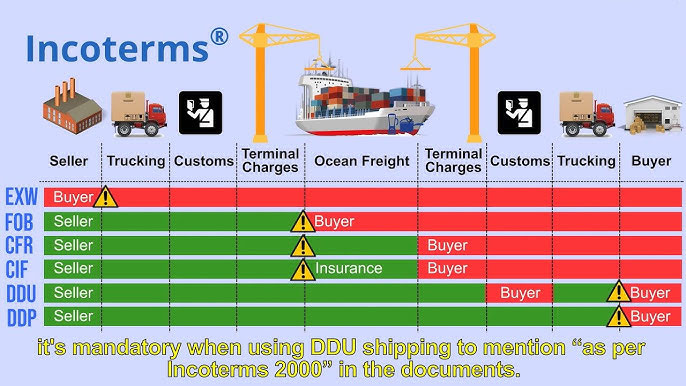
CIF (Cost, Insurance and Freight) means the seller is responsible for the following:
- Handling export customs clearance
- Paying freight costs to the port of destination (e.g., Sydney, Melbourne, Brisbane)
- Purchasing marine insurance
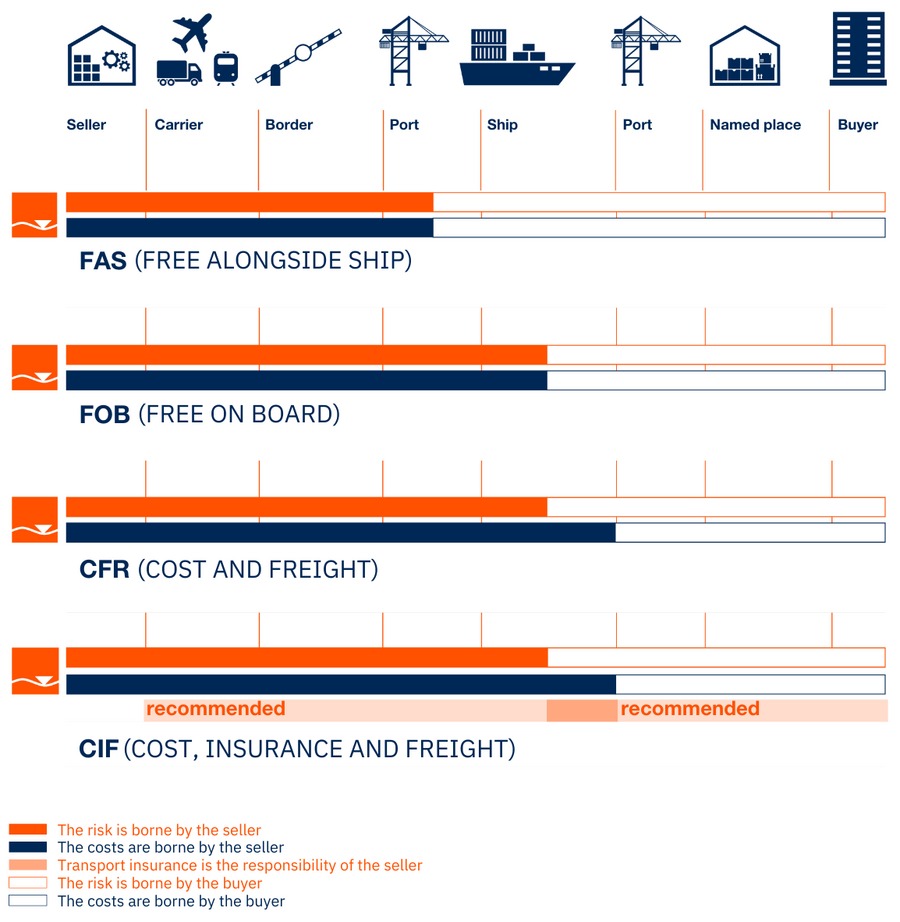
Thus, the seller arranges, transports, and insures the goods until they arrive at the destination port in Australia. However, all responsibility transfers to the buyer once the goods are loaded on board the vessel at the port of export.
Advantages of CIF for Australian importers
- Optimal for businesses new to importing
- No need to find or deal extensively with logistics providers
- Financial protection because the seller has already purchased insurance for the goods
- Easy to calculate exact costs since the price already includes freight and insurance
Disadvantages of CIF for Australian importers
- Costs can easily be inflated because the seller has full control over vessel selection and insurance purchase; they may add extra margins for profit.
- Longer transit time because the seller may choose the cheapest shipping option to maximize their profit.
- The seller only purchases minimum coverage insurance (Institute Cargo Clauses C level) for major risks such as sinking or fire. If your goods are fragile or easily damaged, you will need to spend extra money to upgrade the insurance to All Risks coverage (Institute Cargo Clauses A).
WHAT IS FOB?
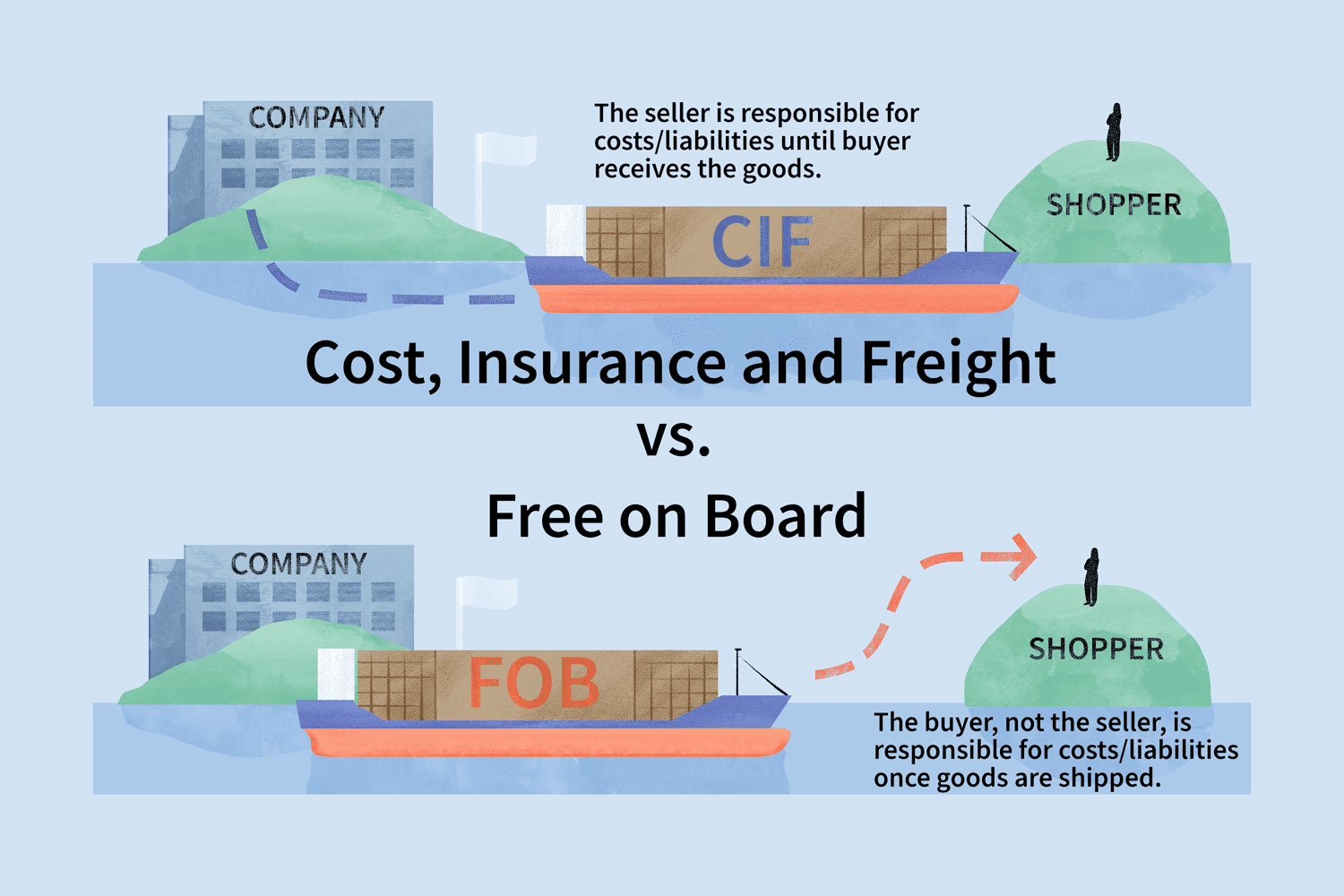
FOB (Free on Board) means the seller is only responsible until the goods are loaded on board the vessel at the port of export. From that point, the buyer takes responsibility for:
- Arranging transportation of the goods
- Purchasing insurance
- Controlling the entire logistics process
Thus, all risks transfer to the buyer immediately after the goods are loaded on board.
Advantages of FOB for Australian importers
- Full control over carrier selection and shipping routes – choose the fastest or cheapest option to save costs.
- Greater cost transparency because you negotiate freight rates directly with the Freight Forwarder. Avoids the seller inflating freight charges for profit.
- Since you purchase insurance in your own country, claims and compensation procedures are easier if damage occurs.
- Suitable for large-volume goods such as structural steel, heavy machinery.
Disadvantages of FOB for Australian importers
- Requires logistics expertise
- Risk of additional costs if the vessel is delayed or issues arise at the loading port
- High administrative and operational burden due to having to find carriers, track schedules, and handle issues yourself.
CIF vs FOB COMPARISON
| Criteria | CIF | FOB |
| Arrange transportation | Seller | Buyer |
| Purchase insurance
Level of logistics control |
Seller
Low |
Buyer
High |
| Cost transparency | Lower | Higher |
| Suitable for beginners | Yes | No |
| Suitable for experienced importers | Less suitable | Suitable |
CIF vs FOB: WHICH TERM IS SUITABLE FOR AUSTRALIAN IMPORTERS?
CIF is better if:
- You have little international logistics experience
- You do not yet have a reliable freight forwarder in Australia
- You are not yet familiar with Australian customs procedures
- You are only importing small shipments
FOB is better if:
- You already have a freight forwarder in Australia (Sydney/Melbourne)
- You understand the port charges in Australia
- You import regularly (monthly or quarterly)
- You use it for high-value or large-volume orders
If you are in the building materials, mechanical fabrication, or industrial equipment sector, choosing FOB will deliver better long-term cost efficiency. This is especially true for imports from Asian suppliers.
SOME HIDDEN COSTS TO CONSIDER
Regardless of whether you choose CIF vs FOB, you still need to account for costs such as:
- Port handling fees
- THC (Terminal Handling Charges)
- Customs clearance fees
- Biosecurity inspection fees (AQIS)
- GST and import duties
Using CIF often leads to some unexpected charges upon arrival at the port. In contrast, FOB usually offers higher cost transparency.
SO BETWEEN CIF vs FOB: WHICH ONE SHOULD YOU CHOOSE?
In reality, it is very difficult to give a definitive answer to the question “CIF vs FOB: Which is better for Australian importers?”
Because choosing the appropriate term depends on the business scale, logistics expertise, risk tolerance, type of goods, relationship with the supplier, and many other factors.
Looking for a dependable steel fabricator for steel components, stainless steel, structural steel, sheet metal fabrication? Contact us today to discuss your requirements.
Email: sales@newindscorp.com
Phone/Whatsapp/Zalo: Ann Yen +84 868 482 038