
The rapid pace of industrialization has significantly increased the demand for metal enclosures, driven by the need to protect components and control systems in industries such as industrial automation, oil & gas, chemicals, and energy. As a reputable metal cabinet manufacturer, Newinds has been selected by customers worldwide as a trusted supplier of metal cabinets for their projects.
MAIN FUNCTIONS OF METAL ENCLOSURES
A metal enclosure is a steel protective housing designed to safeguard electrical equipment, components, machinery, and automation systems from water, dust, and other environmental factors. Acting as an outer protective layer, the enclosure provides a safe and controlled space, ensuring stable and efficient operation of electrical and automation systems.
A typical metal cabinet consists of the following main components:
- Cabinet body: The main structural frame that bears mechanical loads and encloses internal equipment
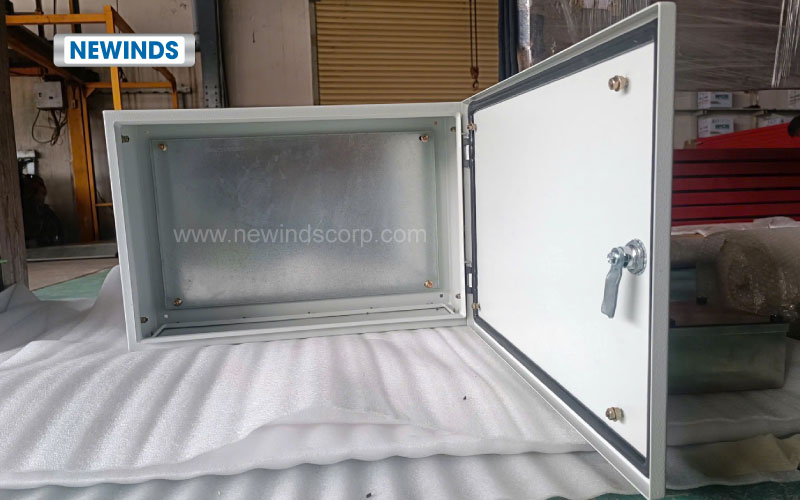
- Cabinet door: Allows easy access for users to operate, inspect, and maintain internal components
- Flanges and accessories: Including locks, hinges, rubber gaskets for water sealing, and other fittings
Depending on the application and operating environment, metal cabinets can be fabricated in various materials, sizes, and configurations.
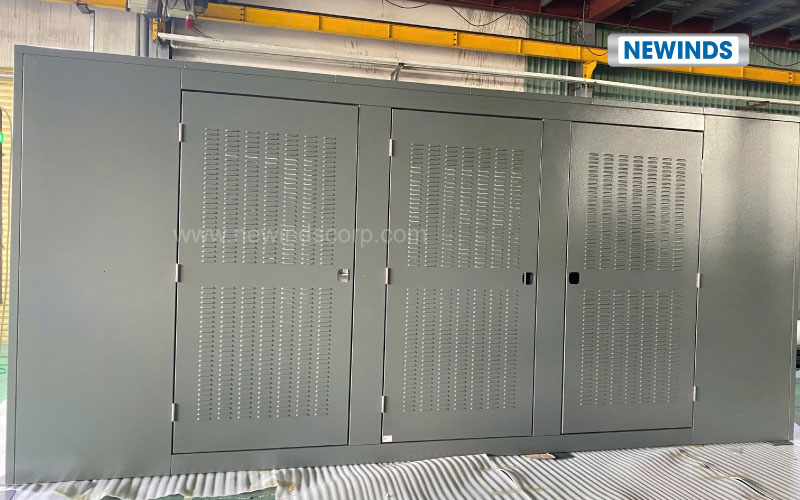
MAIN MATERIALS USED FOR METAL ENCLOSURES
- Cold Rolled Steel: Suitable for indoor cabinets used in dry environments such as offices and control rooms
- Galvanized Steel: Commonly used in factories and industrial zones with humid conditions
- Stainless Steel: Ideal for outdoor applications, coastal areas, and industries such as food processing, medical, and chemical sectors.
- Powder Coated Steel: This is a surface finishing method rather than a base material, providing enhanced corrosion resistance and high aesthetic quality.
TECHNICAL STANDARDS FOR ELECTRICAL ENCLOSURES
-
Environmental Protection Standard – IP Rating
| IP Rating | Description |
| IP54 | Protection against dust and splashing water |
| IP55 | Protection against dust and low-pressure water jets |
| IP65 | Complete dust protection and resistance to strong water jets |
| IP66 | Protection against high-pressure water jets |
| IP67 | Protection against temporary immersion |
For outdoor electrical enclosures, IP55–IP66 are the most commonly applied ratings.
-
Mechanical Impact Resistance – IK Rating
| IK Rating | Impact Energy |
| IK08 | 5 Joules |
| IK09 | 10 Joules |
| IK10 | 20 Joules |
For heavy-duty industrial electrical cabinets, an IK09–IK10 rating is typically required.
-
Electrical Safety and Structural Standards
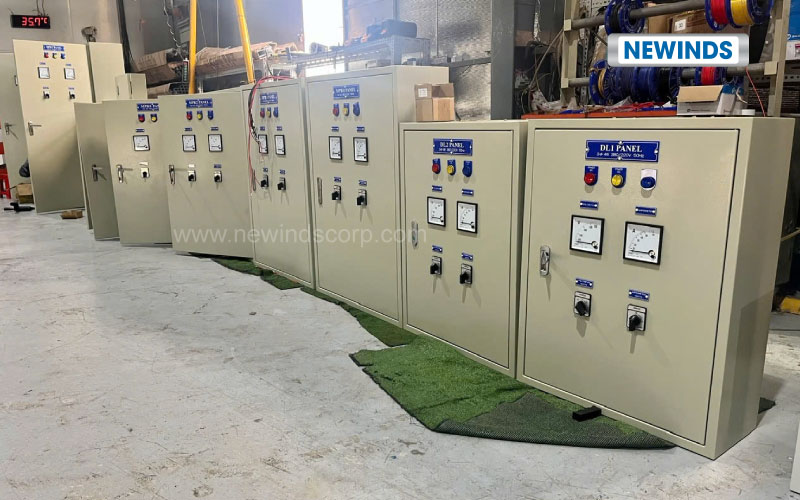
IEC 61439: Applicable to low-voltage switchgear and controlgear assemblies
IEC 60204-1: Ensures electrical safety of machinery and applies to enclosures mounted on machines
-
Material and Corrosion Protection Standards
| Standard | Description |
| ISO 12944 | Corrosion protection using paint systems |
| ASTM A653 | Galvanized steel |
| ASTM A240 | Stainless steel |
| ISO 9227 | Salt spray (corrosion) testing |
Examples:
- Powder coating thickness ≥ 60–80 μm
- Salt spray test ≥ 500–1000 hours
In addition to the standards listed above, metal cabinet manufacturers must also comply with specific regulations and standards of the destination markets where the products are delivered.
DESIGN CRITERIA FOR ELECTRICAL ENCLOSURES
-
Application and Operating Environment
Determine whether the cabinet will be installed indoors or outdoors. Outdoor enclosures require higher durability and a structure that effectively prevents the ingress of water and dust.
Consider environmental conditions such as coastal locations, humidity, dust levels, or dry environments. For harsh conditions, stainless steel enclosures or powder-coated solutions are recommended to ensure long-term weather resistance.
These factors form the basis for selecting materials and defining relevant IP and IK ratings.
-
Dimensions and Structural Design
- Define the overall dimensions accurately (W × H × D)
- Consider whether the cabinet needs to be expandable or easily disassembled
- Required material thickness: This factor directly affects both the cost and aesthetic appearance of the product. Using thick metal sheets for small cabinets can result in a bulky design and higher costs. Conversely, using metal sheets that are too thin may compromise structural strength, making the cabinet unable to withstand mechanical loads and more prone to deformation under impact.
Recommended sheet thickness based on cabinet height:
Cabinet height < 400 mm: 1.0 mm
Cabinet height 400 – 800 mm: 1.2 mm
Cabinet height 800 – 1800 mm: 1.5 mm
Cabinet height 1800 – 2200 mm: 2.0 mm
-
Protection Standards
IP Rating – IEC 60529
(IP54, IP55, IP65, IP66…)
IK Rating – IEC 62262
(IK08 – IK10)
-
Material Selection Based on Project Requirements
- Cold Rolled Steel (SPCC)
- Galvanized Steel (GI / SGCC)
- Stainless Steel (304 / 316)
- Aluminum
-
Electrical Safety and Earthing
Proper consideration must be given to earthing points, safe insulation distances, and protection against direct contact to ensure electrical safety.
-
Heat Dissipation and Ventilation
The metal enclosures design must account for:
Natural ventilation
Cooling fans, louvers, and filters
Adequate clearance for heat dissipation of internal equipment
CHOOSE THE RIGHT METAL CABINET MANUFACTURER
Many international customers have chosen Newinds as their reliable supplier of metal enclosures for their projects. This serves as clear evidence of our product quality and service reliability, giving you full confidence when partnering with us.
Our customers are mainly located in Australia, New Zealand, the United States, Canada, the EU, and the UK. Therefore, all of our metal cabinet solutions comply with stringent international standards, and we possess extensive experience in shipping and delivering products to these demanding markets.
If you need a high-quality metal cabinet manufacturer offering tailored metal enclosures that meet international standards.
Contact Newinds:
Email: sales@newindscorp.com
Phone/Whatsapp/Zalo: Ann Yen +84 868 482 038