
More and more Australian metal fabrication project owners are choosing outsourcing steel fabrication in Vietnam to diversify their supply chains, expand their markets, and reduce dependence on China’s fabrication market, especially for products such as structural steel, sheet metal, metal enclosures, and stainless steel. Thanks to competitive costs and government policies that encourage foreign investment, steel fabricators in Vietnam have become trusted partners for Australian importers.
ADVANTAGES OF OUTSOURCING STEEL FABRICATION IN VIETNAM
-
Competitive production costs
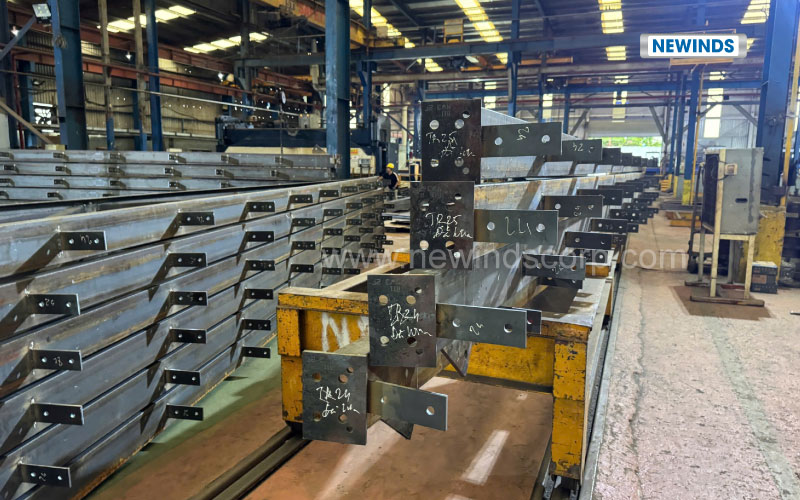
Compared with neighboring countries such as China, Thailand, Myanmar, Bangladesh, and India, Vietnam’s labor costs remain highly competitive. In recent years, manufacturing labor costs in China have tended to increase and range from USD 700–1,000 per month, nearly twice the level in Vietnam. In Thailand, labor costs are approximately 20–30% higher than in Vietnam, and factory rental costs are also significantly higher, resulting in a higher overall production cost.
-
Government support policies
In recent years, the Vietnamese government has implemented various policies to attract foreign investment, including initiatives that support outsourcing steel fabrication in Vietnam and strengthen the country’s manufacturing capabilities.
- Tax incentives: FDI enterprises are exempt from corporate income tax during the initial years of operation across many industries.
- Preferential corporate income tax rates lower than the standard rate, along with reduced import duties on machinery and production materials.
- Development of industrial zones such as VSIP I (Binh Duong), export processing zones such as Tan Thuan (Ho Chi Minh City), and high-tech parks such as Quang Trung Software Park, all with modern and well-developed infrastructure.
-
Strategic location for exports
With a coastline stretching over 3,200 km and major cities and industrial zones located near deep-water ports, Vietnam offers convenient access for exporting goods. Major industrial clusters include Ho Chi Minh City, Dong Nai, Tay Ninh, Hanoi, Hai Phong, and Bac Ninh. These locations are connected to key maritime routes linking China, Japan, and South Korea through Southeast Asia and the Strait of Malacca to India, the Middle East, and Europe.
-
Increasingly modern manufacturing capability
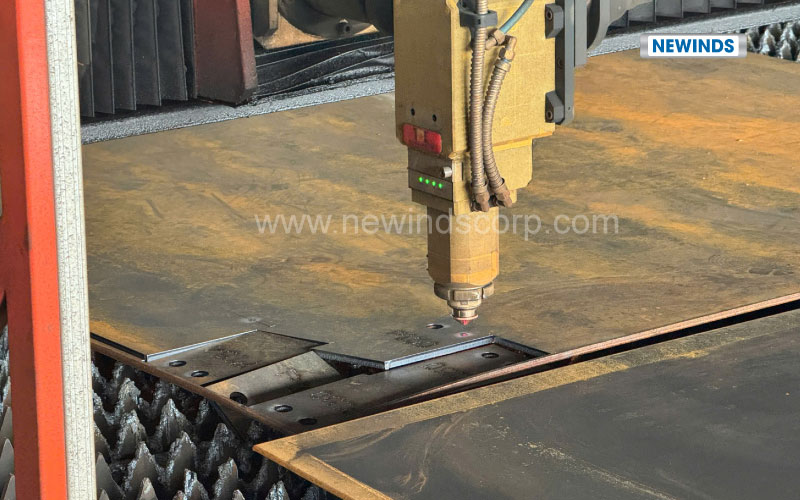
Through cooperation with developed markets, steel fabricators in Vietnam have accumulated experience in meeting international quality standards and have invested in modern equipment such as fiber laser cutting machines, automated welding robots, CNC press brakes, CNC punching machines, automated powder coating systems, and CAD/CAM software.
-
Global export experience
Many steel fabricators in Vietnam are already exporting to Japan, Korea, Australia, New Zealand, the Americas, the United Kingdom, Europe, and other demanding markets. As a result, buyers can have confidence in their English communication skills, ability to meet international technical requirements, quality control processes, and export documentation experience.
For steel fabrication companies experienced in exporting to Australia, they understand requirements related to country-of-origin labeling, fumigation before shipment, and import documentation for major ports such as Melbourne, Sydney, Brisbane, Fremantle, and Adelaide.
-
Flexibility in order quantities
Many large factories require high minimum order quantities to optimize costs. However, steel fabrication companies in Vietnam are often willing to support prototyping, low-volume production, and custom fabrication. This is particularly suitable for first-time buyers, startups, and distributors looking to expand their supply chains.
DISADVANTAGES OF OUTSOURCING STEEL FABRICATION IN VIETNAM
-
Uneven manufacturing capability and quality among steel fabricators in Vietnam
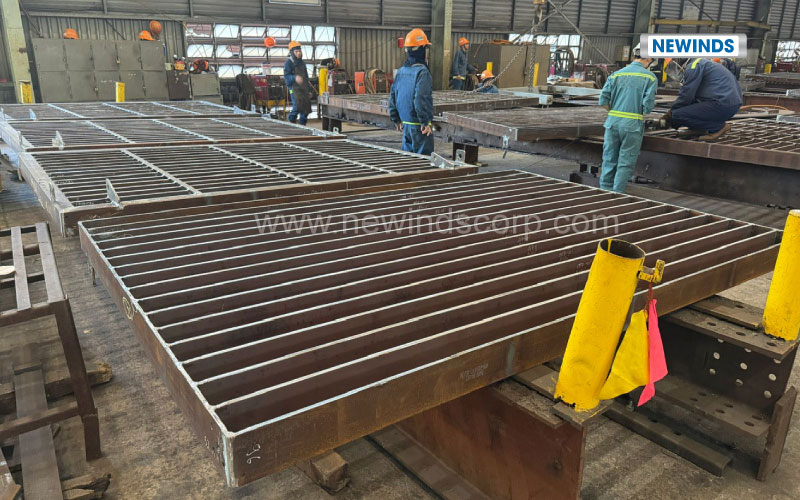
This is one of the biggest concerns for Australian importers. The manufacturing capability and technical expertise of steel fabricators in Vietnam can vary significantly. Experienced export-oriented factories are equipped with modern machinery and standardized processes, resulting in relatively stable quality. However, many smaller workshops still rely on semi-manual processes and lack the equipment needed for complex orders. This can cause buyers to become dependent on a limited number of capable factories and have fewer alternative options when needed.
-
Dependence on imported raw materials
Vietnam’s metal fabrication industry still relies heavily on imported materials from China, Taiwan, South Korea, Japan, and Australia, especially for hot-rolled steel coils, hot-dip galvanized steel, and stainless steel. This creates challenges when Australian importers require products made from these materials, as additional lead time is needed to procure the materials from overseas.
-
International certifications are not yet common across all steel fabrication companies
Australia is a market where fabricated metal products must meet strict technical standards to suit local climate and environmental conditions. One major challenge for some steel fabricators in Vietnam is that they may not yet fully comply with all of these stringent requirements.
SHOULD YOU CHOOSE OUTSOURCING STEEL FABRICATION IN VIETNAM?
You should choose it if:
- Your business has a sufficiently large and stable order volume.
- You can plan your production 10–16 weeks in advance to accommodate the longer lead time compared to domestic sourcing, including the time required for supplier selection, evaluation, manufacturing, and shipping.
- You are willing to invest in the supplier sourcing stage, including supplier identification, factory audits, and sample approval before placing orders.
- Your products have clear drawings and technical specifications, allowing Vietnam metal fabricators to manufacture efficiently without requiring extensive revisions or approval cycles.
You should not choose it if:
- Your business requires urgent delivery within 1–2 weeks, such as manufacturing facilities that need replacement components immediately.
- Your business places small, non-recurring orders. When the outsourcing volume is too low, additional costs such as production setup, CNC programming, export packaging, and shipping documentation can significantly increase the overall manufacturing cost. In some cases, the total cost may even exceed that of domestic outsourcing.
- Your project requires 100% direct production control, frequent design modifications, or the daily presence of engineers at the manufacturing facility. Geographic distance can make such requirements difficult to manage effectively and may result in higher costs.
Based on the detailed analysis of the advantages and disadvantages of outsourcing steel fabrication in Vietnam, it is clear that the decision goes beyond simply optimizing production costs. More importantly, it involves a broader strategy of supply chain diversification and the establishment of long-term manufacturing partnerships. Newinds hope the insights compiled above will help you make the right decision for your upcoming project.
Are you looking for reliable outsourcing steel fabrication companies in Vietnam offering tailored metal solutions that meet international standards.
Contact Newinds:
- Email: sales@newindscorp.com
- Phone/Whatsapp/Zalo: Ann Yen +84 344 644 077