
Structural steel construction is an indispensable construction method in the era of industrialization and modernization, thanks to its outstanding advantages in load-bearing capacity, cost efficiency, and flexibility to meet a wide range of construction requirements.
Join Newinds as we take a deeper look at the characteristics of structural steel, its advantages and disadvantages, and answer common questions related to this material.
WHAT IS STRUCTURAL STEEL?
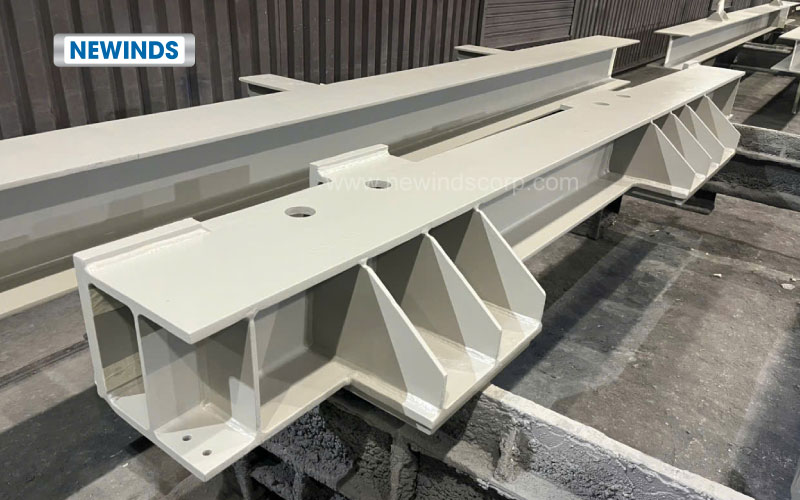
Structural steel is an iron-based alloy containing a small amount of carbon (typically less than 1%). It is specifically engineered to achieve a high strength-to-weight ratio, making it ideal for construction projects that require heavy load-bearing capacity.
Key Characteristics
- High mechanical strength and excellent strength-to-weight ratio: Suitable for long-span designs in warehouses and industrial buildings, reducing overall structural weight and optimizing foundation costs.
- Good ductility and toughness: Structural steel has high ductility and good impact resistance, allowing it to perform well under cold conditions or dynamic loads without brittle failure.
- Excellent weldability: With tightly controlled carbon content and impurities, structural steel is easy to weld and well-suited for cutting, bending, drilling, and forming processes in fabrication workshops.
COMMON TYPES OF STRUCTURAL STEEL
Structural steel is manufactured in various shapes to optimize performance for different applications. Common types supplied by steel fabricators include:
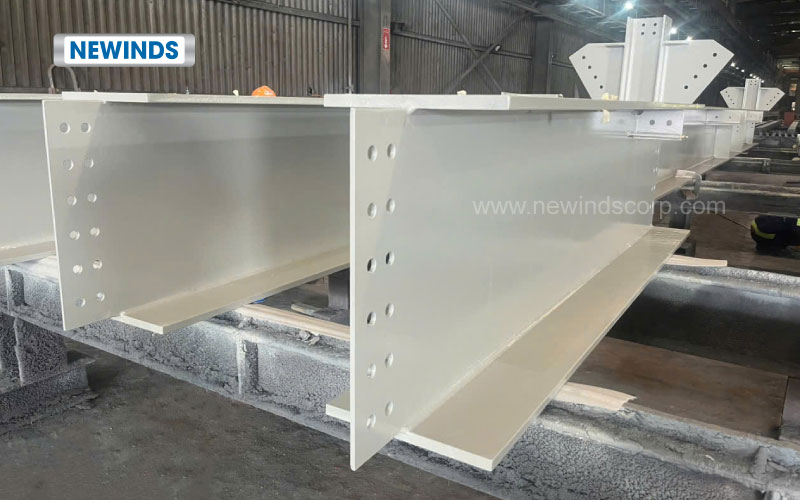
- I-beams, H-beams, or Wide Flange Beams
- Channels (C-shapes)
- Angles (L-shapes)
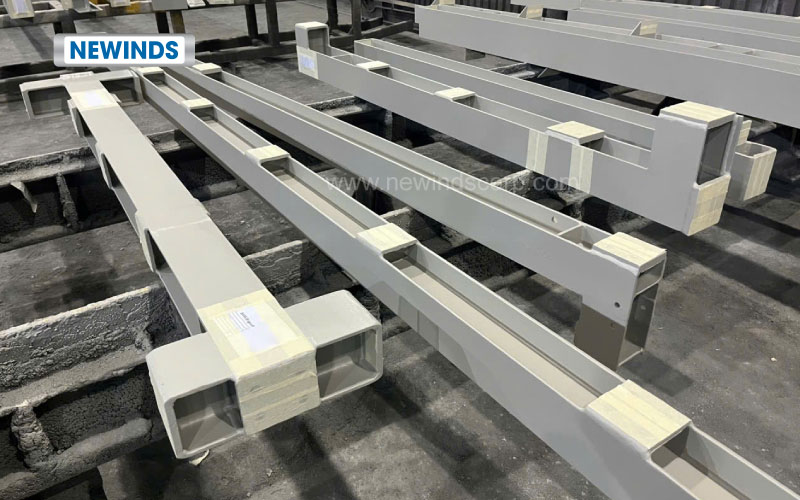
- Hollow Structural Sections (HSS)
- Steel plates and flat bars
STRUCTURAL STEEL FABRICATION PROCESS
To produce components that meet project requirements, steel fabricators follow a standardized and well-controlled fabrication process, including the following steps:
-
Design and detailed drawings
CAD software is used to create technical shop drawings based on project specifications.
-
Steel cutting
Laser cutting, plasma cutting, or sawing machines are used to cut steel to the required dimensions.
-
Bending and forming
Press brakes or rolling machines are used to achieve the required angles and curves.
-
Drilling, punching, and machining
Bolt holes and connection details are fabricated for assembly.
-
Welding
Components are joined using MIG, TIG, or arc welding to ensure high structural strength.
-
Trial assembly and inspection
Temporary assembly is carried out in the workshop to verify dimensional accuracy.
-
Surface treatment
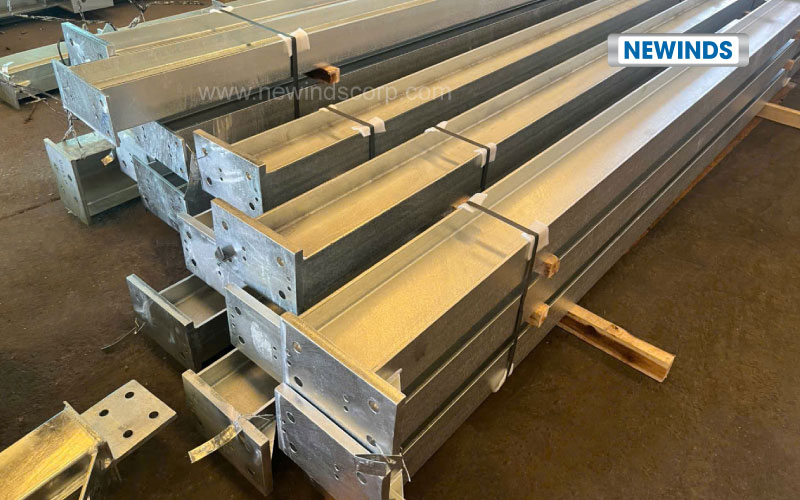
Sandblasting, anti-corrosion painting, or galvanizing is applied to extend the service life of steel components.
-
Transportation and site installation
Components are safely loaded into containers, transported to site, unloaded using cranes, and erected into a complete steel structure.
STRUCTURAL STEEL STANDARDS IN AUSTRALIA
Australia is recognized as one of the countries with the most stringent and clearly defined standards for steel products. Steel fabricators exporting structural steel to Australia must comply with the following key standards:
- AS 4100: Primary standard for the design, fabrication, and erection of steel structures.
- AS/NZS 5131: Specifies requirements for fabrication and erection, including quality and risk management.
- AS/NZS 3678: Requirements for hot-rolled steel plates, floor plates, and slabs used in structural applications.
- AS/NZS 3679.1 and 3679.2: Standards for hot-rolled sections, beams, and welded beams.
- AS/NZS 1163: Standard for cold-formed hollow steel sections.
These standards are established by the Australian government to ensure that steel structures can withstand loads, seismic activity, strong winds, and Australia’s harsh environmental conditions.
APPLICATIONS OF STRUCTURAL STEEL
- High-rise buildings and commercial developments
- Bridges and transportation infrastructure
- Industrial factories and warehouses
- Stadiums and convention centers
- Special structures such as offshore platforms and communication towers
ADVANTAGES AND DISADVANTAGES OF STRUCTURAL STEEL
Advantages
- High strength with relatively low weight, helping reduce material costs.
- Faster construction time due to off-site fabrication.
- Flexible design options to accommodate a wide range of steel structure projects.
- Easy to expand, modify, or retrofit when required.
- 100% recyclable without loss of quality.
- Excellent resistance to earthquakes and strong winds due to its ductility.
Disadvantages
Susceptible to corrosion if surface protection and regular maintenance are inadequate.
- Steel fabricators typically recommend anti-corrosion coatings or galvanizing for projects located in coastal, humid, or industrial environments.
- Initial investment costs may be higher than reinforced concrete for small-scale projects.
- High thermal conductivity, which can result in higher indoor temperatures in summer and colder conditions in winter, increasing energy costs for cooling and heating.
- Although steel is non-combustible, it loses strength rapidly at high temperatures and may lead to structural failure. To improve fire resistance, steel fabricators commonly apply fire protection solutions such as intumescent coatings, gypsum board encasement, or spray-applied fireproofing.
FAQs
- What factors should be considered when selecting a steel fabricator?
Key factors include experience, technical expertise, industry reputation, machinery and equipment, and the skill level of the workforce.
- What is the most significant drawback affecting the performance of structural steel?
Corrosion is the most critical factor affecting performance, as it can cause deformation, cracking, and a reduction in load-bearing capacity.
- How long does structural steel fabrication typically take?
Fabrication time largely depends on project scale, complexity, and the fabricator’s production capacity:
- Small to medium projects (1,000–3,000 m²): approximately 4–6 weeks
- Medium-scale projects (5,000–10,000 m²): approximately 6–10 weeks
- Large-scale or highly complex projects: approximately 10–16 weeks
- Can structural steel be reused after dismantling?
Yes. Structural steel components can be reused on a new foundation without melting. Steel scrap, however, must be melted down to produce new steel products.
- Which is more cost-effective: structural steel or concrete?
Structural steel is generally more cost-effective than reinforced concrete when considering total costs, including initial investment, construction time, and long-term operational expenses.
If you need a high-quality steel fabricator offering tailored metal solutions that meet international standards.
Contact Newinds:
Email: sales@newindscorp.com
Phone/Whatsapp/Zalo: Ann Yen +84 868 482 038