
Australian standards for structural steel are recognised as one of the most detailed and stringent sets of standards in the world today. This is largely due to Australia’s highly diverse and harsh natural environment, combined with its massive mining industry, which demands materials with exceptional strength and durability to ensure absolute safety.
Below is the most complete and up-to-date (November 2025) list of the key Australian standards for structural steel directly related to steel structures and metal fabrication.
AS/NZS 1554 – STRUCTURAL STEEL WELDING
- AS/NZS 1554.1:2004 (currently being replaced by 2014 + Amdt 3-2024) – Welding of steel structures for general construction (the most important part)
- AS/NZS 1554.2 – Welding for dynamically loaded structures (bridges, cranes)
- AS/NZS 1554.3 – Corrosion-resistant welding (coastal structures)
- AS/NZS 1554.4 – Welding of heat-resistant steels
- AS/NZS 1554.5 – Welding of high-strength steels (700–900 MPa)
- AS/NZS 1554.6 – Welding of stainless steel
- AS/NZS 1554.7 – Welding of seismic-resistant steel structures (newly added 2023)
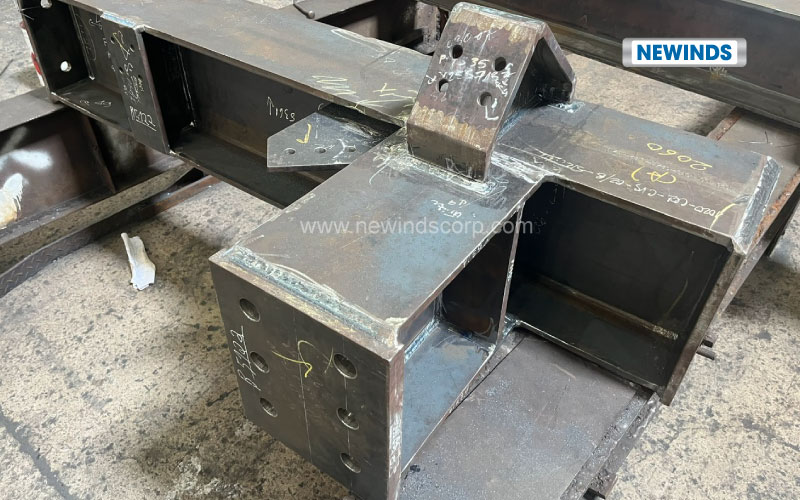
AS 4100 – STEEL STRUCTURES
Current version: AS 4100:2020 + Amendment 1 (2023) + Amendment 2 (2024). Specifies loads, safety factors, and stability checks for beams, columns, frames, and connections, fatigue, and fire design.
AS/NZS 5131 – STRUCTURAL STEELWORK FABRICATION AND ERECTION
The “bible” for every steel fabricator in Australia. Defines 4 Construction Categories (CC1 → CC4) based on complexity and risk.
2024 updates introduced stricter NDT requirements (UT, MT, PT) for CC3 & CC4 and mandatory ISO 3834-3 certification for workshops – essential for any standard for metal fabrication in Australia and for exporting to the EU.
AS/NZS 5100 – BRIDGE DESIGN
Part 6 specifically covers steel and steel-concrete composite bridges for road and rail.
KEY MATERIAL STANDARDS
AS/NZS 1163 – Cold-formed structural steel hollow sections (C250, C350, C450, C500 added for high-rise)
AS/NZS 3678 – Hot-rolled plate, floorplate and slab
AS/NZS 3679.1 – Hot-rolled structural steel bars and sections (UB, UC, PFC, EA, UA…)
AS/NZS 1594 – Hot-rolled steel flat products
NON-DESTRUCTIVE TESTING & SURFACE PREPARATION
AS 2207:2018 – Ultrasonic testing methods and quality classification for carbon & low-alloy steel
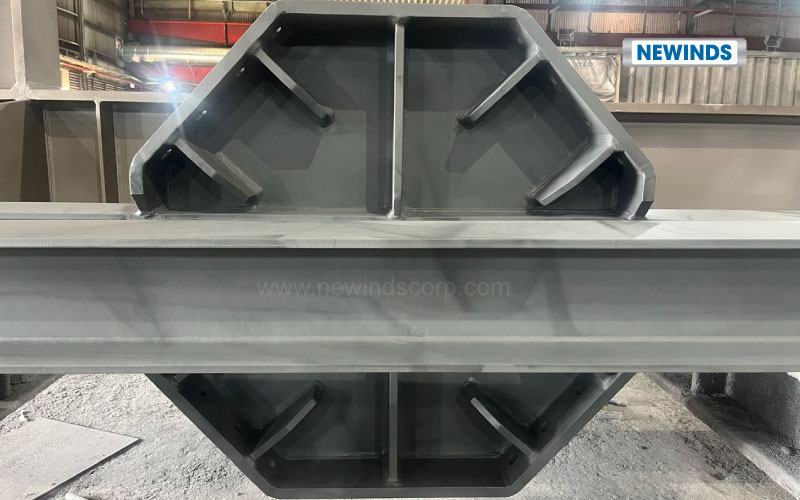
AS 1627.4:2005 (Amdt 2022) – Abrasive blast cleaning of steel (Sa 2½ standard, now with silica-free eco-friendly media)
PROTECTIVE COATINGS
AS 3750.15:1998 – Inorganic zinc silicate primer
AS/NZS 2312:2014 – Guide to the protection of structural steel against atmospheric corrosion (now includes AI-based corrosion prediction models)
AS/NZS 4680:2006 (Amdt 2024) – Hot-dip galvanizing on fabricated ferrous articles (minimum 85 µm zinc thickness, new duplex system adhesion tests)
WHY ARE AUSTRALIAN STANDARDS FOR STRUCTURAL STEEL BECOMING INCREASINGLY STRINGENT?
Australia is one of the countries most vulnerable to extreme weather, from Cyclone Ilsa (2023), record bushfires, to rising sea levels along its coastline. This has forced the government to mandate a minimum 15-year durability for all steel structures, with updated corrosion tables in AS/NZS 2312.2:2023 requiring duplex coatings (galvanising + epoxy) in C4–C5 (high/corrosive) environments from 2025 onward.
At the same time, the rapid development of high-strength steels (500–800 MPa) and automated fabrication processes requires the standard for metal fabrication to keep pace with global technology.
Additionally, Australia’s commitment to Net Zero 2050 has led to prioritisation of recycled and “green” steel. Recent amendments to AS/NZS 1163 & 1594 (2023–2024) now require low-carbon certification (e.g., BlueScope XLERPLATE® Zero) and integrate these materials into AS 4100 without increasing emissions.
The increasing stringency of Australian standards for structural steel is a proactive response to real-world risks, from workplace accidents to climate change, while driving technological innovation and sustainability.
Strict compliance not only helps companies avoid heavy fines (up to millions of AUD) but also significantly boosts reputation and success rate in winning major projects across Australia and New Zealand.
If you manufacture or export structural steel to Australia, make sure your workshop meets at least the following Australian steel standards:
- AS/NZS 1554.1 Category SP (Structural Purpose)
- AS/NZS 5131 Construction Category CC2 or CC3
- ISO 3834-2 or ISO 3834-3 welding quality certification
Contact Newinds:
Email: sales@newindscorp.com
Phone/Whatsapp/Zalo: Ann Yen +84 344 644 077