
You’ve surely encountered steel bollards at least once on the streets, in factories, or in crowded areas. So, what exactly is the function of bollards, and which types are most commonly used? In particular, when selecting products from a reputable steel bollard manufacturers, your project will be guaranteed in terms of quality, durability, and impact resistance according to safety standards. All of this will be explained in the article below.
WHAT IS STEEL BOLLARD?
Steel bollard is a type of steel post installed either fixed or flexibly on the ground. Bollards serve to control vehicle access, protect structures from collisions, and guide traffic flow.
In terms of structure, a bollard consists of the main components:
- Body (main post)
- Top cap
- Buried base/foot
- Base plate & anchor bolts (for surface-mounted types)
- Surface finish layer
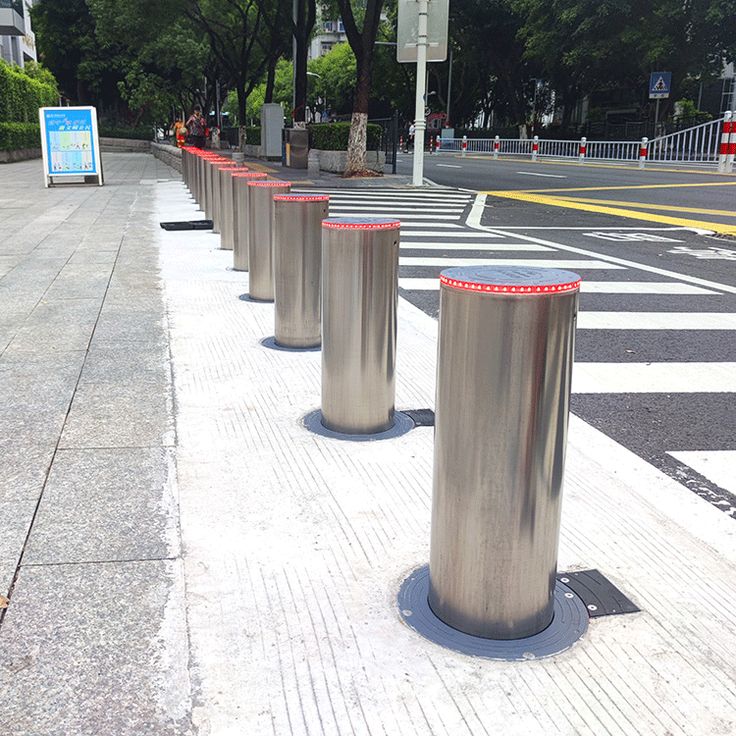
Nowadays, most steel bollard manufacturers offer a variety of materials for fabricating the bollard body, such as:
- Carbon steel pipe (mild steel)
- Hot-dip galvanized steel
- Stainless steel
Applications
Safety bollards are designed to perform effectively in the following areas:
- Traffic control and road safety
- Storefronts & shopping malls
- Parking lots and residential complexes
- Factories and logistics warehouses
- High-security zones such as banks, government buildings, airports
COMMON TYPES OF BOLLARDS
- Fixed Bollard: Installed permanently and fixed in place by pouring concrete underground, allowing it to withstand significant impact forces.
- Removable bollard: Can be flexibly removed and reinstalled, making it suitable for areas requiring vehicle control based on varying traffic density.
- Hydraulic bollard: Raised and lowered using a hydraulic system, primarily used for automatic access control in high-end security areas.
- Surface-mounted bollard: Mounted on the surface using bolts, without the need for deep excavation.
- Decorative bollard: Features an attractive design, can be equipped with reflective strips or lights, and is commonly used for urban landscape decoration
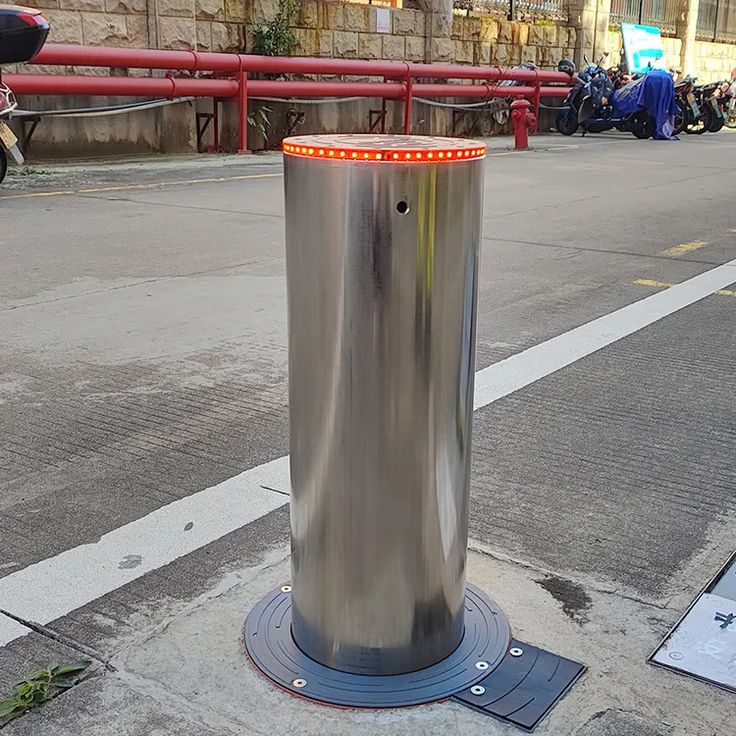
COMPARISON TABLE OF SAFETY BOLLARD TYPES
| Bollard Type | Durability | Flexibility | Cost | Applications | Installation Time |
| Fixed (Permanent) | Highest | Low | Medium | Long-term protection, industrial areas
|
Long (concrete pour) |
| Removable (Detachable) | Medium | High | Low-Medium | Areas needing temporary access/opening | Quick |
| Hydraulic | High | Very High | High | Automatic security, anti-terrorism | Medium-Long |
| Surface-Mounted | Medium | High | Low | Quick installation, no deep excavation | Very Quick |
| Decorative
|
Low-Medium | Medium | Low | Urban decoration, landscaping | Quick |
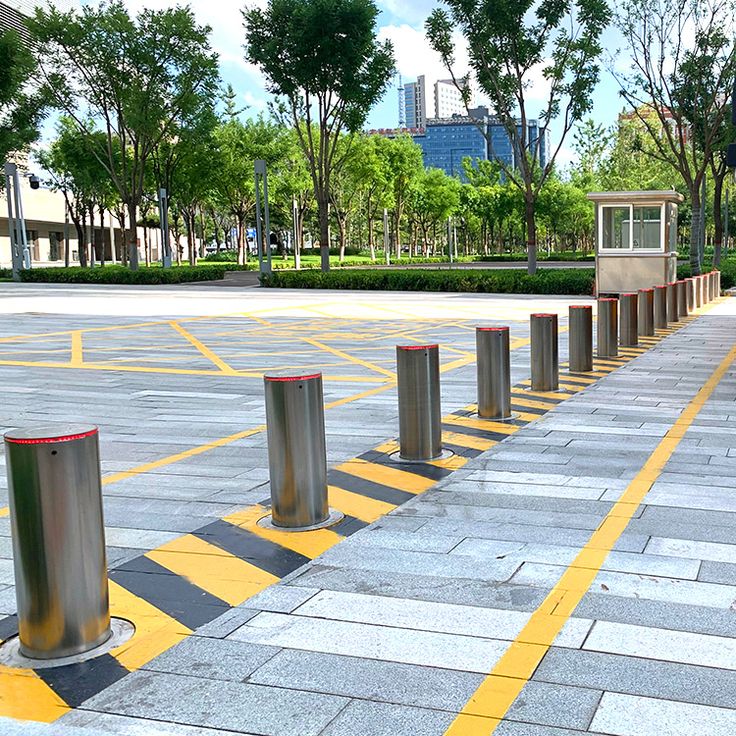
HOW TO CHOOSE AND PURCHASE STEEL BOLLARDS SUITABLE FOR YOUR NEEDS
Steel bollard manufacturers design and fabricate bollards to be optimized for specific applications and usage areas. Therefore, to ensure that safety bollards perform at their best, when selecting them you need to consider the following factors:
Purpose of Use:
- If you need protection against strong impacts: Fixed Bollards
- If you only need lane separation: Removable or decorative bollards
Level of Impact Resistance:
- For small vehicles (passenger cars): bollards with a diameter of 100–150mm
- For large vehicles (trucks): ≥200mm
Installation Location:
- Outdoor areas: Should use hot-dip galvanized steel or electrostatic powder-coated steel for rust resistance
- Humid or wet areas: Use stainless steel 304/316
Dimensions:
- Common heights range from 600–1200mm
- Common diameters range from 100–300mm
The spacing between bollards should be approximately 1–1.5m to effectively prevent vehicle entry
When purchasing, you should choose a reputable steel bollard manufacturer to ensure standard steel material quality, precise design and fabrication, compliance with impact standards, professional service, and adherence to legal regulations.
MAINTENANCE GUIDE TO KEEP STEEL BOLLARDS PERFORMING OPTIMALLY
In addition to the initial quality provided by the steel bollard manufacturers during fabrication, regular maintenance has a very significant impact on the bollard’s long-term performance. Therefore, maintenance should be carried out periodically every 6 months (or every 3 months in harsh environments) with the following specific tasks:
- Overall inspection: Check for cracks, dents, deformation, vertical alignment of the bollard, and whether the surrounding concrete foundation shows any cracking, settling, or damage.
- Surface cleaning of the bollard: Use clean water and mild neutral soap for cleaning; do not use strong chemicals that could cause corrosion.
- Check the anti-rust layer: Inspect for any brown stains on stainless steel bollards; if present, clean them using specialized solutions or diluted vinegar.
- Mechanical/hydraulic maintenance (for automatic types): Periodically (every 6 months) check the lubrication of joints and guide rails, hydraulic oil condition, and the electrical system.
If you need high-quality steel bollard manufacturer, offering tailored metal fabrication solutions that meet international standards.
Contact Newinds:
Email: sales@newindscorp.com
Phone/Whatsapp/Zalo: Ann Yen +84 868 482 038